Antarctica is the highest, driest, and coldest continent on Earth. Its characteristics make it inhospitable to most multicellular life forms, however, microbes are present in every niche, from underwater lakes to the roots of the two native vascular plants in Antarctica, Deschampsia antarctica and Colobanthus quitensis. Our work in the region follows two interrelated lines: where the plant-associated microbiome comes from and what it does, and how microbes and pollutants arrive from lower latitudes.
1. Origin and function of the Antarctic rhizosphere
We use Byers Peninsula — an Antarctic Specially Protected Area (ASPA) at the western tip of Livingston Island, South Shetlands — as a model system. We sample six locations spanning a range of conditions: both plants growing together or alone, near the coast, close to a glacier. At each we take rhizosphere and bulk soil, then combine amplicon and shotgun sequencing to characterize community composition, structure, and temporal stability, and isolate abundant rhizosphere taxa to build synthetic communities for experimental tests in the lab.
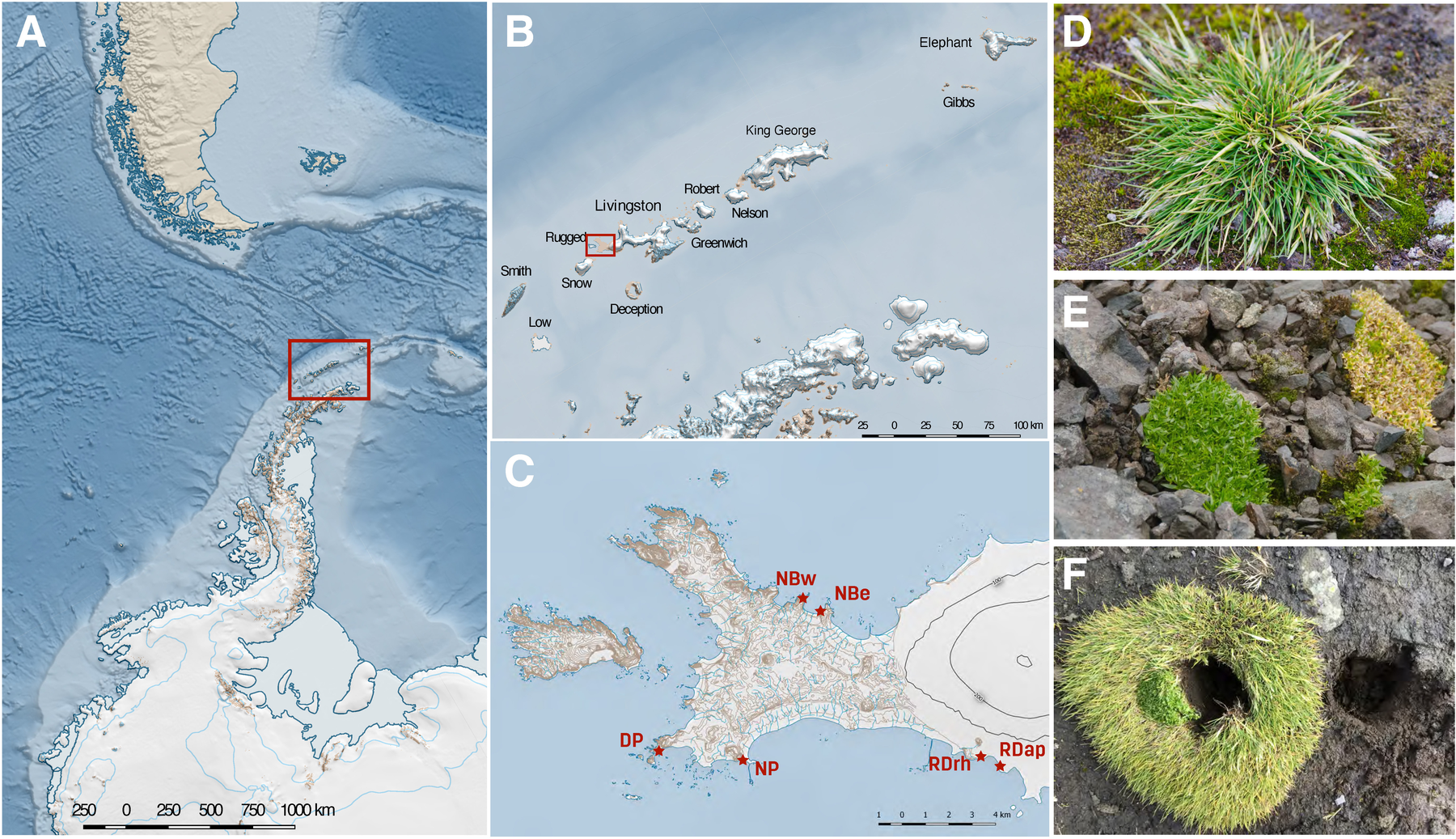
Sampling design at Byers Peninsula. (A) Regional context and (B) the South Shetland Islands, with (C) the six sampling locations on Byers Peninsula. (D) Deschampsia antarctica, (E) Colobanthus quitensis, and (F) a plant cushion of the kind sampled for rhizosphere and bulk soil. From Guajardo-Leiva et al. 2022.
Where does the rhizosphere come from? Host plant species shapes rhizosphere bacterial richness and diversity, and source-tracking shows that bacteria are acquired horizontally from local soils, which homogenizes communities among plant species growing at the same site. Fungi behave differently: sources are local for D. antarctica and for the mixed association, but partly distant for C. quitensis, and a large unassigned fraction points to genuinely stochastic acquisition. Geography (site, latitude, altitude) outweighs plant identity in driving species turnover (Guajardo-Leiva et al. 2022, Frontiers in Microbiology).

Bacterial and fungal beta diversity for Deschampsia antarctica (Da), Colobanthus quitensis (Cq), and their association (Da.Cq).
Microbiome resources. We have released 52 metagenomes and 1,484 metagenome-assembled genomes (MAGs) from Byers Peninsula soil and rhizosphere, spanning diverse bacterial and archaeal lineages adapted to polar conditions (Berríos-Farías et al. 2025, Microbiology Resource Announcements).
A reference genome for the host plant
To study the plant and its microbiome as one system, we needed the plant. We assembled POLARIX, the first chromosome-scale reference genome for an Antarctic angiosperm, from PacBio HiFi reads scaffolded with Hi-C. The assembly resolves into 40 chromosome-scale scaffolds (2n = 80) spanning 887.1 Mb, with a scaffold N50 of 20.4 Mb and a longest scaffold of 35.1 Mb. Completeness is high — 99.0% of embryophyta BUSCOs recovered, 95.7% of them duplicated, the signature of the species’ tetraploid origin — and telomere identification found both telomeres on 29 of the 40 chromosomes. The genome is 69.9% repetitive, dominated by LTR retrotransposons (34.8%, mostly Ty1/Copia and Ty3/Gypsy), and encodes 40,762 protein-coding genes, 95% of them functionally annotated. We also assembled the complete plastid genome (151,314 bp, 113 genes). Reads not assigned to the plant yielded a further 113 high-quality MAGs spanning 13 bacterial phyla — a companion resource for the plant-associated microbiome (Castro-Nallar et al. 2026, Genome Biology and Evolution).
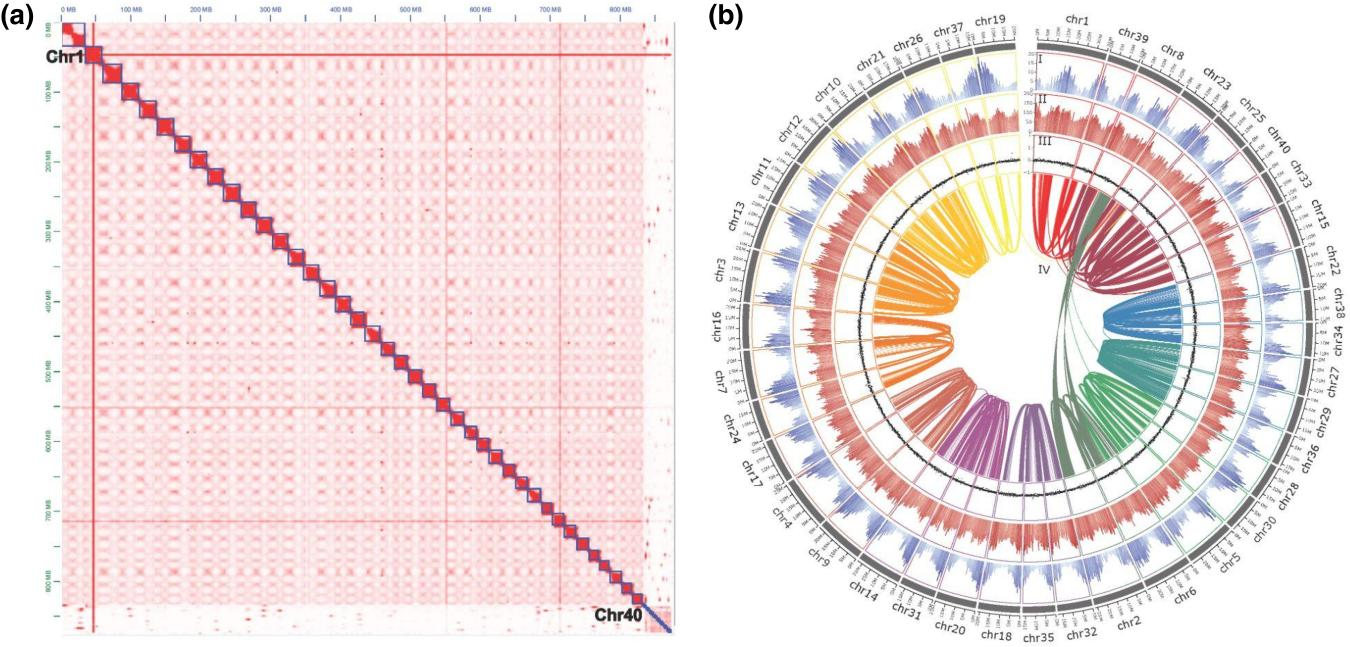
The Colobanthus quitensis genome. (a) Hi-C contact map, showing 40 discrete chromosome-scale scaffolds as sharp squares along the diagonal. (b) Chromosome-scale ideogram: gene density (I), transposon density (II), GC skew (III), and intrachromosomal synteny (IV), where ribbons of the same color mark chromosomes sharing the most connections — the retained architecture of past whole-genome duplication.
This gives us matched host and microbiome genomics for the same system, and a platform for studying polyploidy, genome organization, and adaptive evolution under polar conditions — including the development of cold- and stress-resilient crops.
What the microbiome does for the plant. Root-associated fungal endophyte communities differ between Antarctic habitats, and field reciprocal-transplant experiments show they contribute measurably to host adaptation (Acuña-Rodríguez et al. 2024, Physiologia Plantarum). Endophytes also buffer C. quitensis against the negative effects of persistent organic pollutants (Egas et al. 2025, Physiologia Plantarum) — a direct link between this line of work and the transport work below.
Biotechnological potential. Screening the same soil and rhizosphere metagenomes with hidden Markov models built from experimentally validated PET hydrolases recovered 152 putative PET-hydrolysing enzymes. Four carry the amino acid motifs characteristic of Ideonella sakaiensis PETase, including the conserved α/β hydrolase fold and the Ser-His-Asp catalytic triad, and one candidate from a Duganella genome also carries the tryptophan associated with efficient product release. Docking and molecular dynamics show these candidates retain the core catalytic architecture of established PET hydrolases while displaying structural signatures of cold adaptation — making the Antarctic rhizosphere a reservoir for low-temperature plastic-degrading biocatalysts (Berríos-Farías et al. 2026, Frontiers in Microbiology). In a related effort, consortia of Antarctic bacteria sustained high-level diesel bioremediation in continuous bioreactors at low and mesophilic temperatures (Sulbarán-Bracho et al. 2023, Environmental Pollution).
2. Long-range transport of pollutants and microbes
This line is a collaborative endeavor (POLARIX) involving researchers from Universidad de Chile, Universidad de Talca, and P. Universidad Católica, studying teleconnections between Antarctica and the rest of the world using persistent organic pollutants (POPs) and microbes as models.
We address questions related to: rates of transport and deposition of organic pollutants and microbes to Antarctica, phylogenetic relationships of microbes collected from air and soil, functional traits of microbes and their genetic determinants, response of airborne and soil microbes to pollutants, global origin of airborne microbes and pollutants, colonization of airborne microbes on land and on plant rhizospheres, the potential role of soil as a sink and secondary source of microbes and pollutants under a scenario of climate change, and their impact on plant physiology and soil/rhizosphere composition and function.
Atmospheric rivers as a delivery mechanism
Is Antarctica really isolated? The circumpolar current and the polar front have long been read as a biological barrier, but storm-driven dispersal is now known to break it for macroscopic life. We asked whether the same holds for microbes.
The transect. We sampled a 1,500 km latitudinal gradient from southern Patagonia to the Antarctic Peninsula during the austral summer of 2022 — Puerto Natales, San Gregorio, Punta Arenas, Porvenir and Puerto Williams on the Patagonian side, and Risopatrón Base (Robert Island) and Yelcho Base (Doumer Island) in Antarctica. Air was collected with a Coriolis µ impinger sited to avoid local emissions (300 L min⁻¹ over 3 h, 54 m³ per sample), alongside soil, deposition, seawater, and buffer controls, and profiled with three marker loci (16S rRNA V4, 18S rRNA, and ITS): 193 samples in total, 74 of them air.
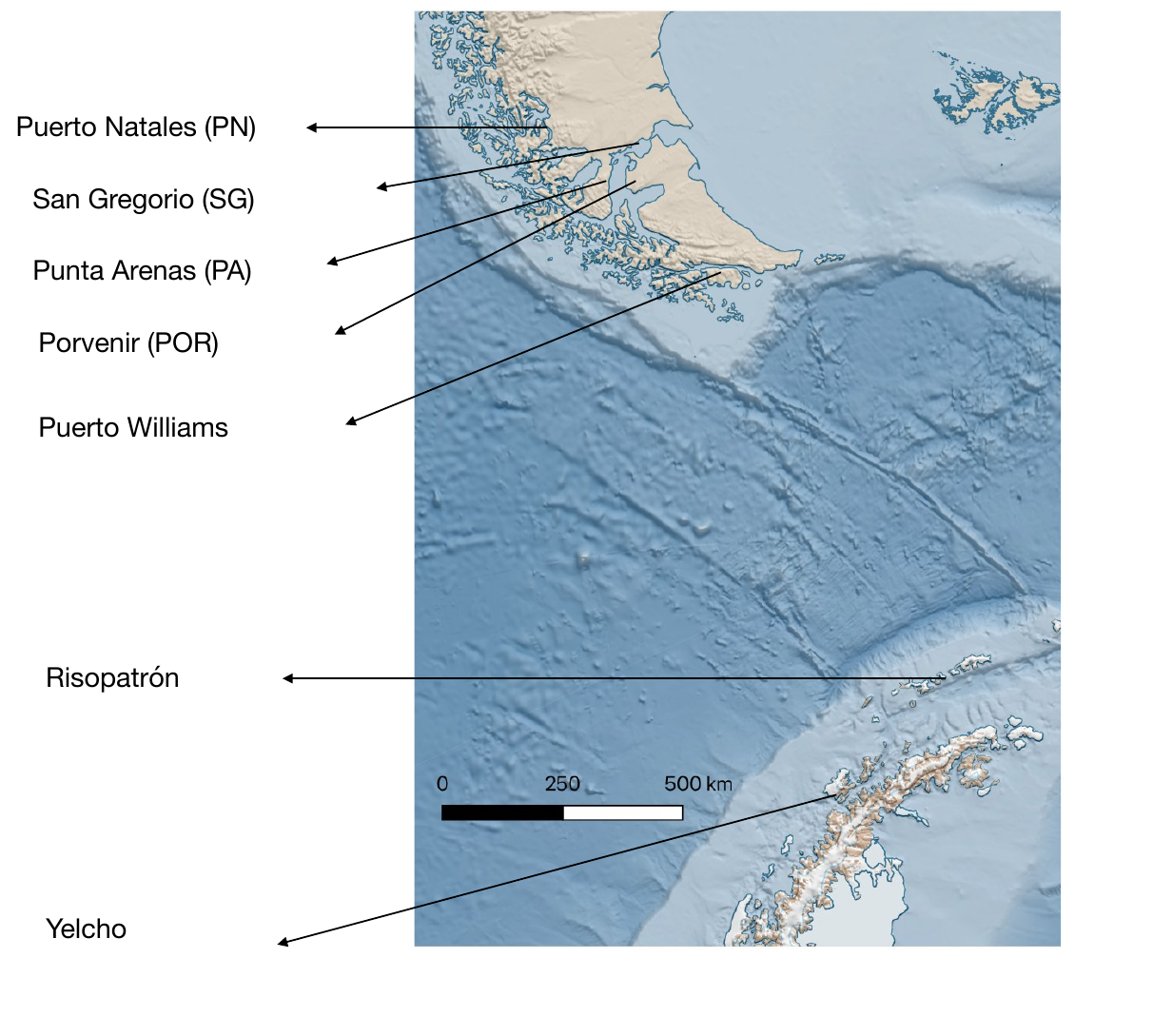
Sampling design: a 1,500 km latitudinal gradient from southern Patagonia to the Antarctic Peninsula, with five Patagonian sites and two Antarctic bases.
Air is its own biome. Weighted-UniFrac ordination places our air communities apart from both Southern Ocean air and local soils, and the air-only ordination arranges Patagonian and Antarctic samples along a continuous latitudinal axis, with Puerto Williams bridging the two. Air is dominated by Proteobacteria and Bacteroidota where soils are dominated by Acidobacteriota and Actinobacteriota, and Cyanobacteria are visible in Antarctic air while absent from the soils beneath it. Phylogenetic diversity in air is consistently far below that of bulk soil and rhizosphere at every site.
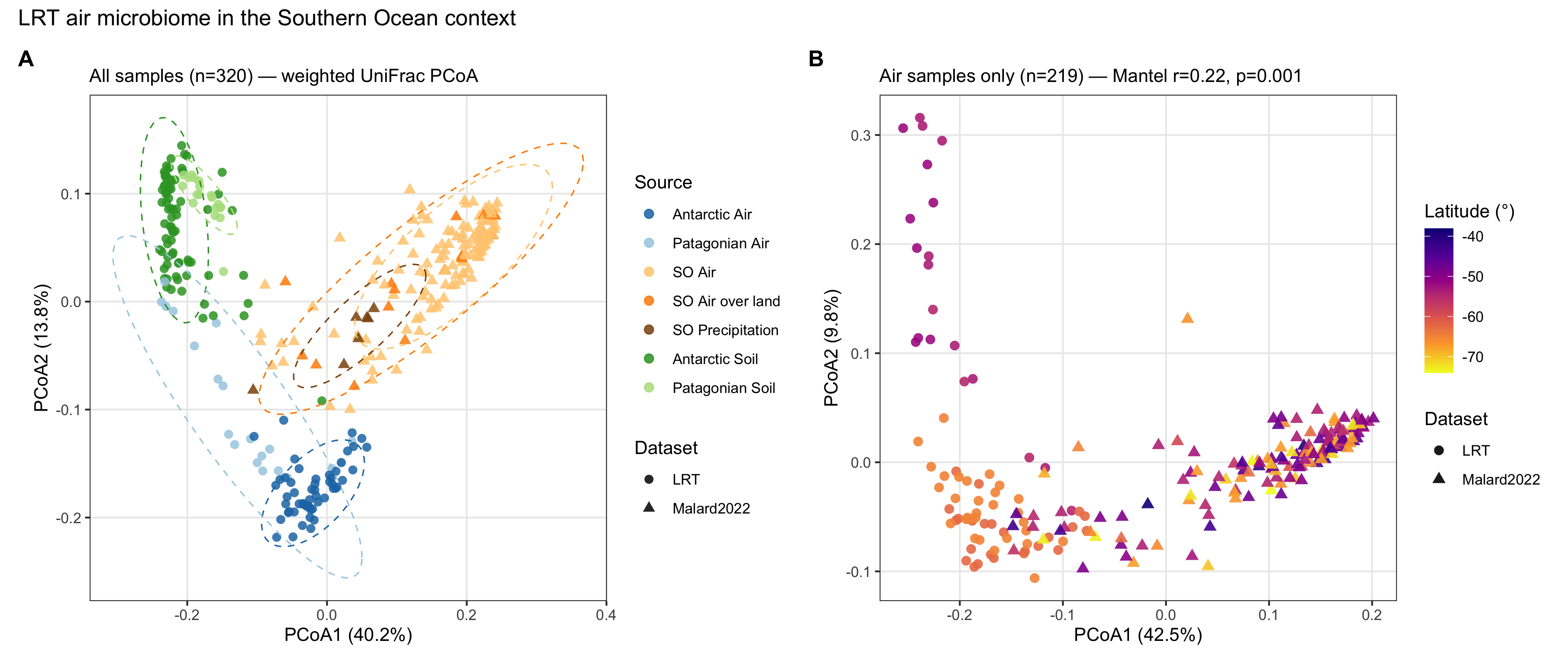
Weighted-UniFrac ordination placing our air, soil, and rhizosphere samples in a regional context against the Southern Ocean air reference. Antarctic and Patagonian air align along a continuous latitudinal axis.
Functionally, air is enriched in one-carbon metabolism (methylotrophy, methanol oxidation, methanotrophy), sulfur oxidation and sulfate respiration, and phototrophy, while nitrification and aerobic ammonia oxidation stay soil-dominated.
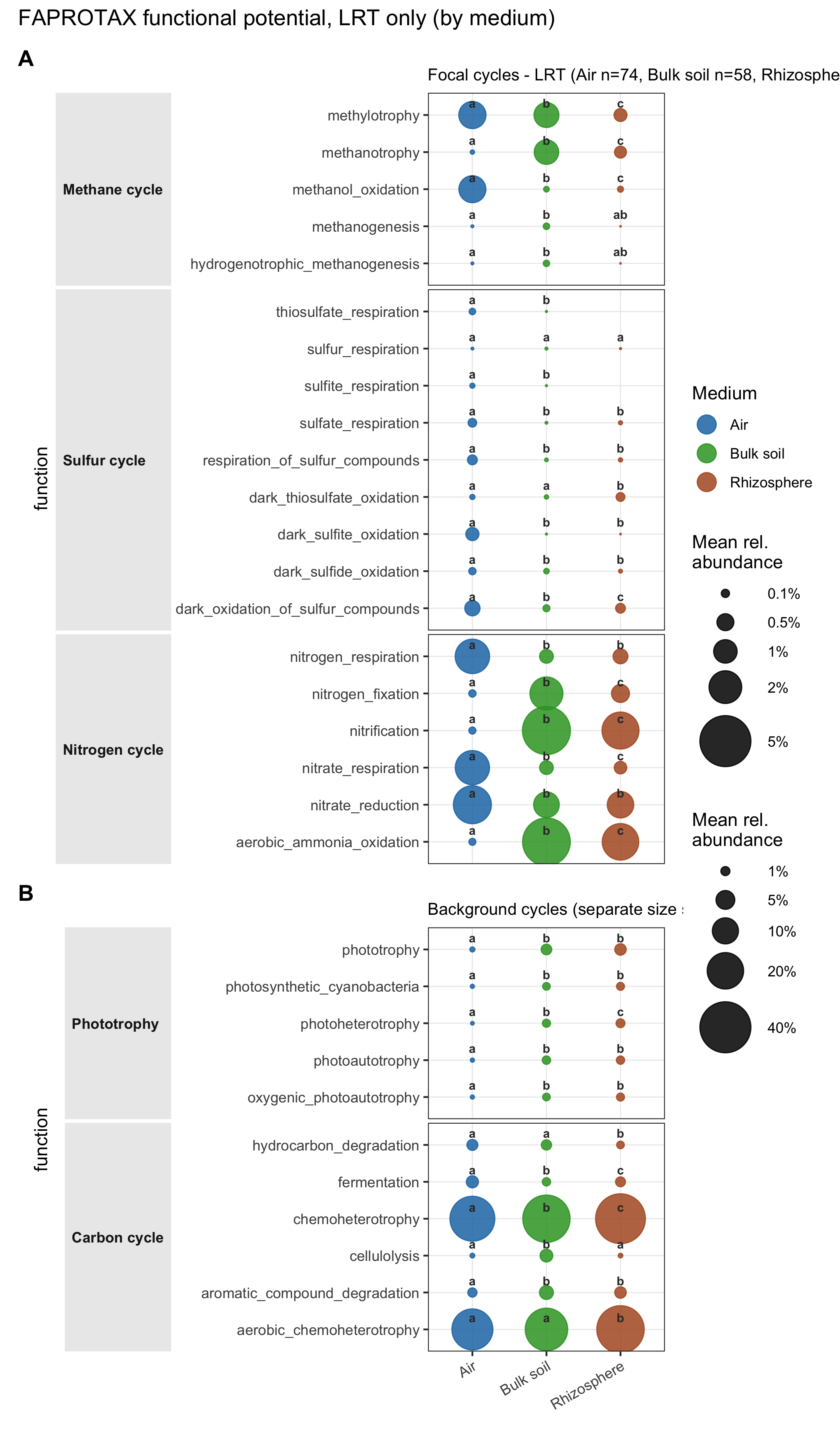
Predicted functional profiles (FAPROTAX). Air is enriched in one-carbon and sulfur metabolism and in phototrophy; nitrification and aerobic ammonia oxidation remain soil-dominated.
A natural experiment. On 7 February 2022 an atmospheric river reached the Antarctic Peninsula, including Risopatrón, in the middle of our sampling window. The bacterial community there shifted in concert with it: Faith’s PD roughly doubled, phylogenetic clustering was erased (NRI collapsed from 5.4 to 0.3), and βNTI moved from a homogeneous-selection regime toward stochasticity — the atmospheric river released the receptor community from its low-biomass selection filter rather than installing a new one. Most of the top genera shifted, and the community had not recovered within the six-day window that followed.
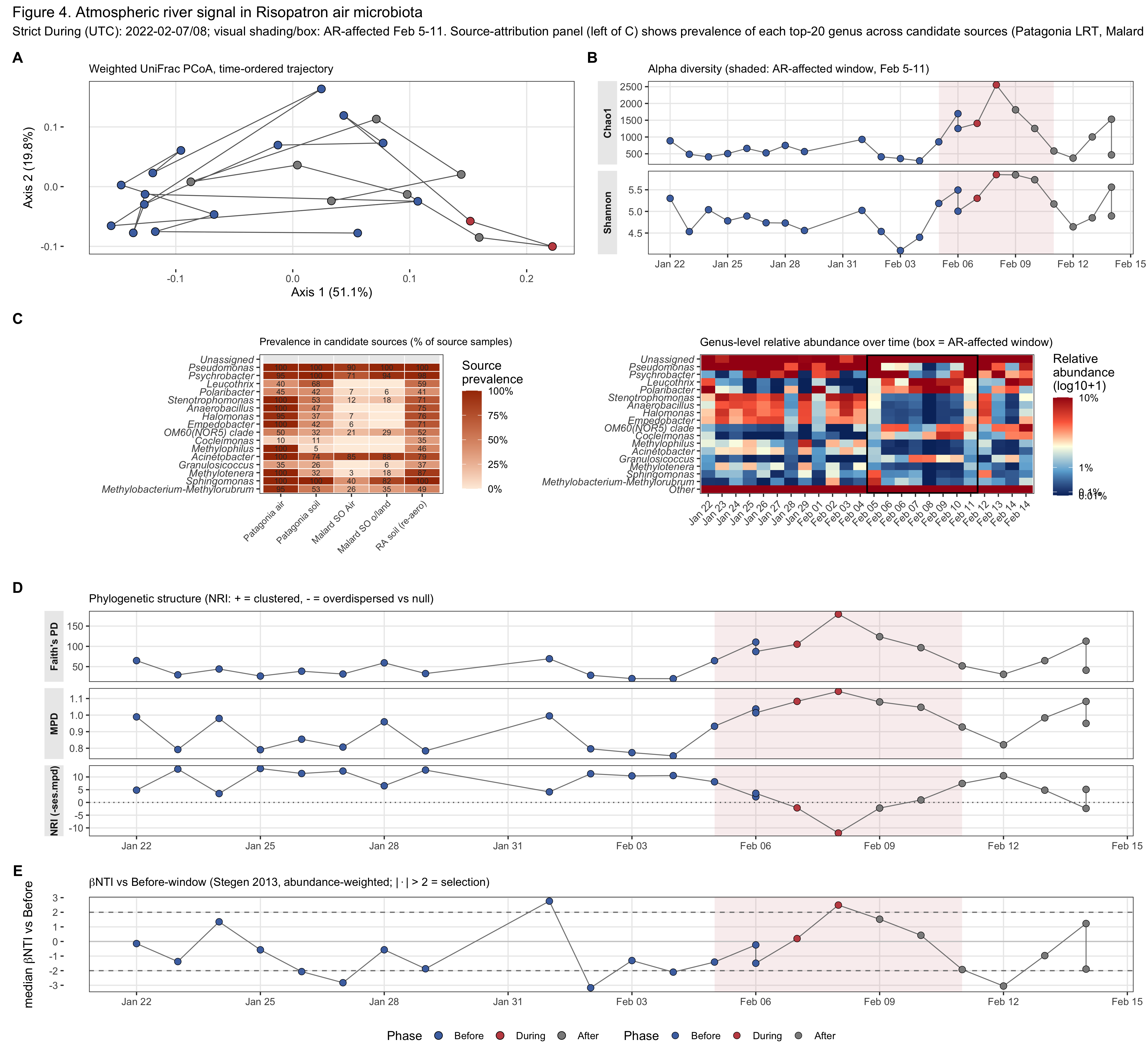
The bacterial community at Risopatrón shifts in concert with the atmospheric river: ordination by phase, alpha diversity, genus-level turnover, phylogenetic structure, and the βNTI regime shift from homogeneous selection toward stochasticity.
Three independent lines of evidence agree. HYSPLIT back-trajectories place air parcels arriving from the Pacific with some originating in southern Patagonia; ERA5 integrated water vapour transport and Z500 fields identify the atmospheric river synoptically; and the CHIMERE chemistry-transport model shows passive gas tracers, dust, and isoprene oxidation products carrying South American emissions along the same corridor.
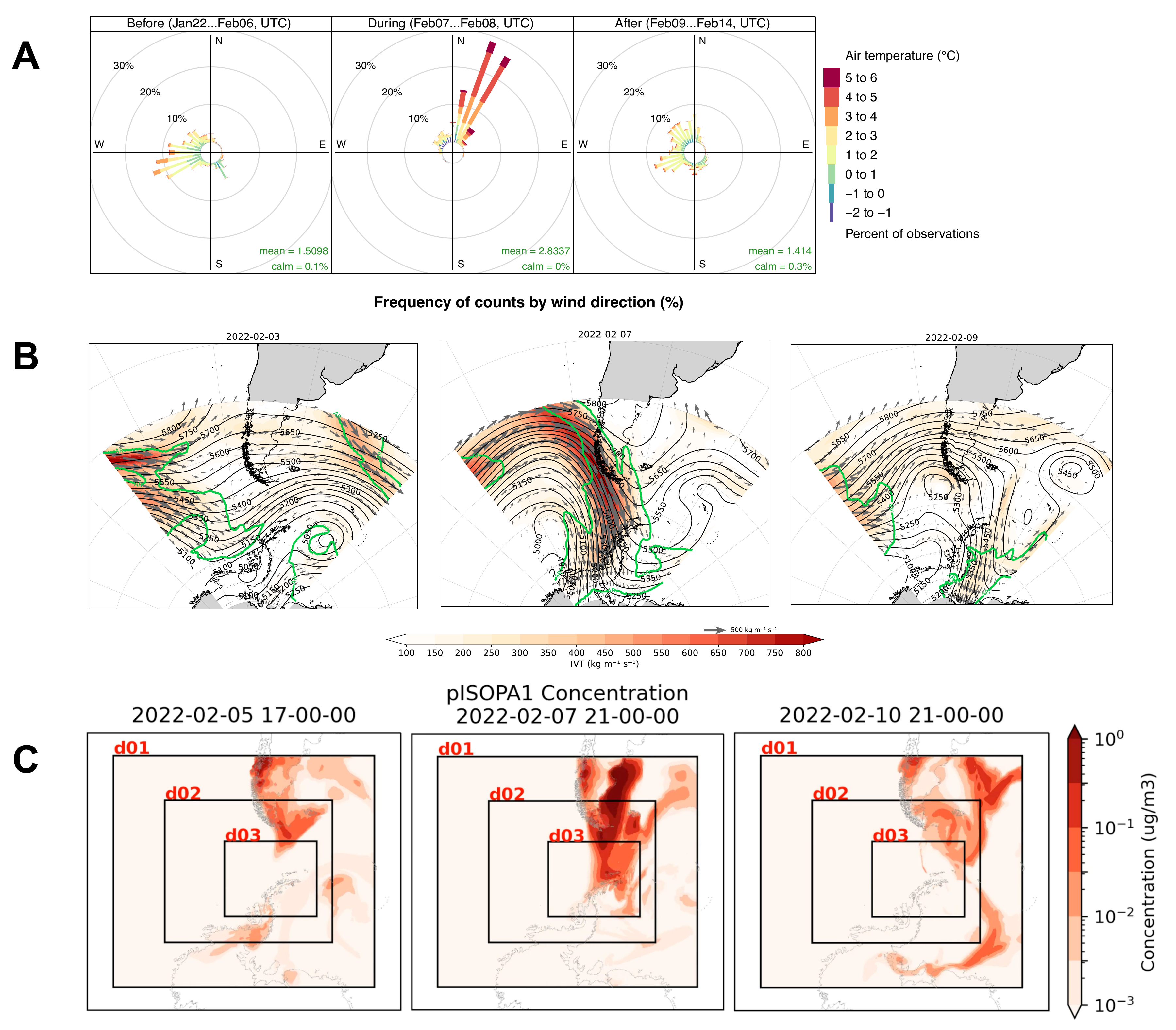
Atmospheric synthesis of the 7–8 February 2022 event: on-site wind, ERA5 integrated water vapour transport and Z500 geopotential, and CHIMERE tracer fields converge on a Patagonia to Peninsula corridor.
Source apportionment closes the argument. Against four candidate source pools, FEAST puts the pre-event baseline of Risopatrón air at roughly 56% Patagonian attribution. Southern Ocean air contributes essentially nothing across all 24 days, and local soil never dominates — quantitatively rejecting both the marine-air-mass and the local-resuspension alternatives. During the event core the apportionment swings to about 80% unknown: a fresh, externally sourced assemblage not represented in any reference pool, which is itself the strongest argument for contemporaneous Patagonia–Peninsula sampling as the next step. Shotgun metagenomics to expand the functional and atmospheric-lifestyle repertoire is underway.
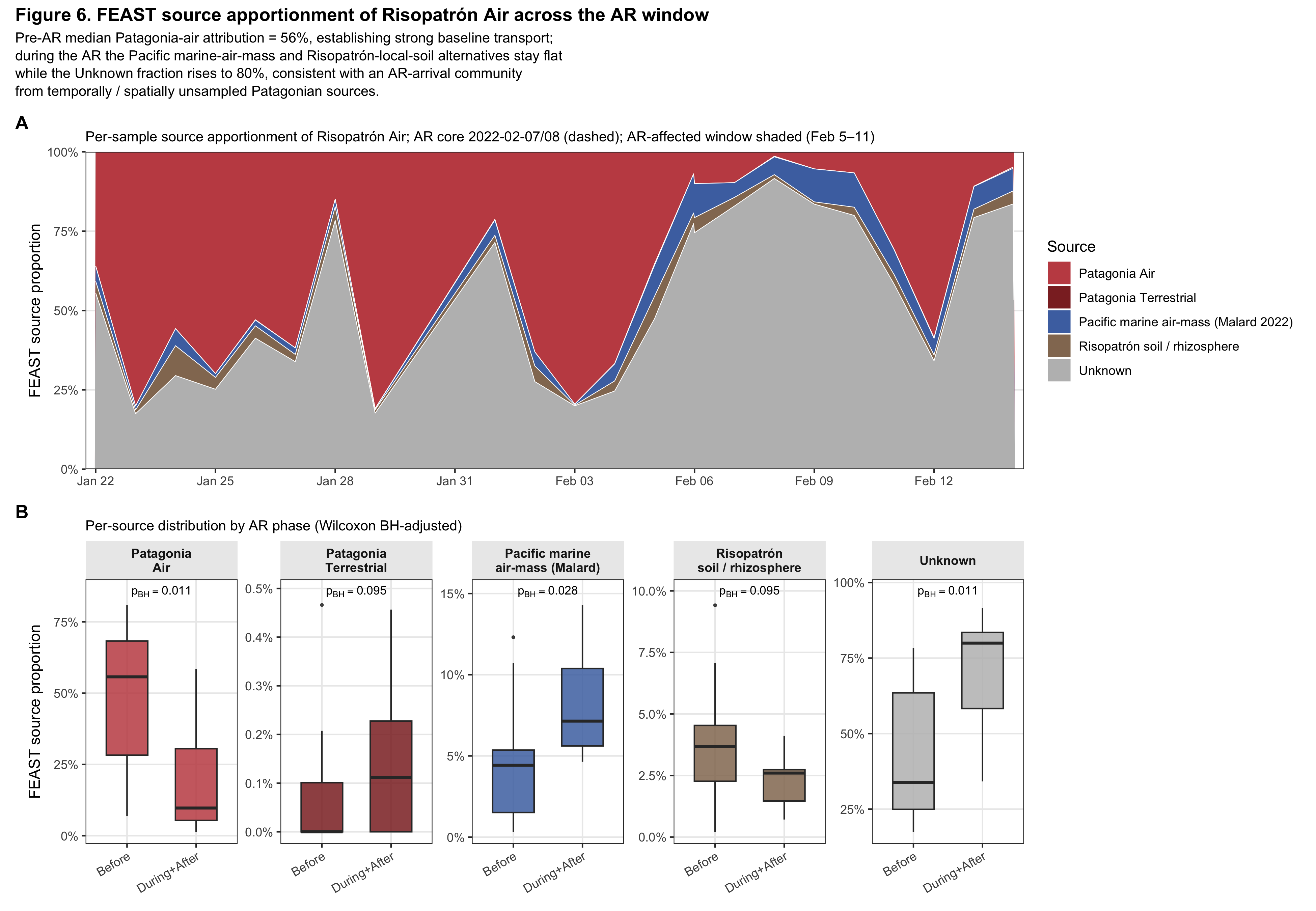
FEAST source apportionment of Risopatrón air across the sampling window. Patagonian sources hold a ~56% baseline; Southern Ocean air contributes essentially nothing throughout; during the event the unknown fraction dominates.
Read the full analysis: Atmospheric rivers deliver Patagonian bioaerosol to the Antarctic Peninsula — a self-contained walkthrough with all figures — or the summary post.
Pollutant baselines. In parallel we have characterized the pollutant side of the same system: POP levels in the Antarctic atmosphere from 1980 to 2021 and their atmospheric half-lives (Luarte et al. 2023), air–seawater exchange of organochlorine pesticides and PCBs in Fildes Bay (Luarte et al. 2024, Science of the Total Environment), fluxes of polycyclic aromatic hydrocarbons in settling particulate matter (Gómez et al. 2025, Czech Polar Reports), and the distribution and bioconcentration of semivolatile organic compounds in sub-Antarctic and Antarctic soils and C. quitensis (Egas et al. 2025, Science of the Total Environment). We have also reviewed what is known about microbial degradation of these compounds in polar ecosystems (Egas et al. 2023, Science of the Total Environment).
References and further material
- Full LRT analysis: Atmospheric rivers deliver Patagonian bioaerosol to the Antarctic Peninsula, with all figures and methods, and the summary post.
- POLARIX on national TV — the project’s objectives and scope, in Spanish: